If your paid search strategy still leans on Dynamic Search Ads, you’re standing at the edge of a major transition.
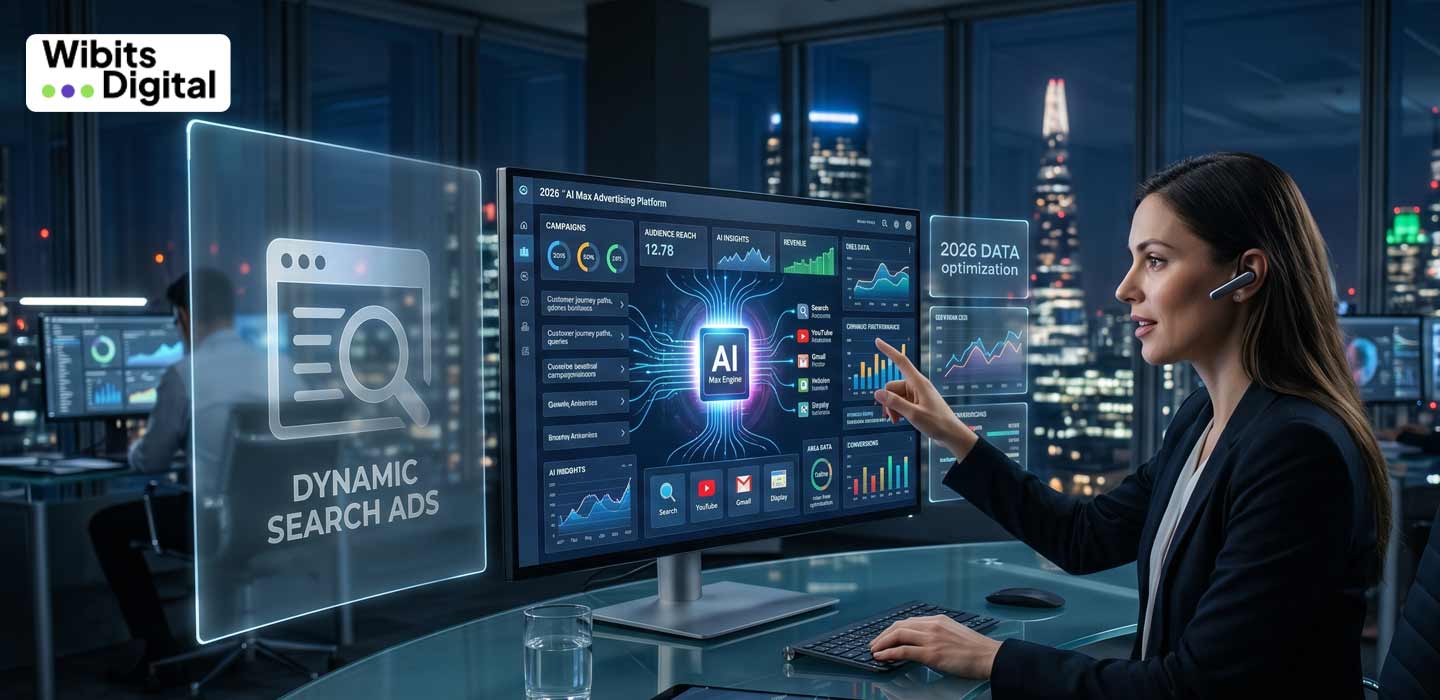
What started as speculation has now become official, Google is replacing Dynamic Search Ads (DSA) with AI Max. And this isn’t just a minor update. It’s a full-scale shift toward automation powered by machine learning, intent signals, and smarter ad delivery.
Starting this September, campaigns using Dynamic Search Ads, automatically created assets, or broad match settings will begin transitioning whether you’re ready or not.
So the real question isn’t if this affects you. It’s how prepared you are for what comes next.
What’s Changing: From Dynamic Search Ads to AI Max
For years, Dynamic Search Ads helped advertisers capture traffic beyond keyword lists by scanning website content and dynamically generating ads. It worked especially well for:
- Large eCommerce websites
- Inventory-heavy businesses
- Brands with constantly changing product pages
Now, Google is evolving that concept into something far more advanced: AI Max for Search.
Instead of just pulling from your website, AI Max uses a broader mix of:
- Landing page signals
- User intent patterns
- Advertiser assets
- Contextual search behavior
This allows campaigns to match with more relevant queries while improving efficiency.
Key Differences: DSA vs AI Max
Here’s a quick breakdown to help you understand the transformation:
| Feature | Dynamic Search Ads (DSA) | AI Max |
| Ad Creation | Based on website content | Combines assets + AI-generated variations |
| Targeting | Website-based matching | Intent-driven + broader signals |
| Control Level | Limited | Advanced controls (brand, location, text) |
| Keyword Dependency | Minimal | Still minimal but more refined |
| Optimization | Semi-automated | Fully AI-enhanced automation |
| Performance Potential | Good for scale | Optimized for conversions + efficiency |
Why Google Is Making This Move
Let’s be honest, search behavior has changed dramatically.
Users today:
- Search in longer, more conversational phrases
- Expect highly relevant results instantly
- Move across devices and platforms seamlessly
Traditional keyword targeting alone can’t keep up.
That’s why Google is doubling down on:
- AI-driven intent matching
- Predictive ad delivery
- Automated optimization
With AI Max, the goal is simple:
Deliver better results with less manual input.
What Exactly Is Migrating?
Google isn’t just removing Dynamic Search Ads, it’s absorbing their core functionality into AI Max.
Here’s how the migration works:
Automatic Feature Mapping
| Existing Setup | AI Max Features Enabled |
| DSA Campaigns | Search term matching, text customization, final URL expansion |
| ACA (Automatically Created Assets) | Search term matching, text customization |
| Broad Match Campaigns | Search term matching only |
Timeline You Need to Know
Phase 1: Voluntary Upgrades Happening Now
- Google is rolling out upgrade tools
- Advertisers can manually transition campaigns
- Full control over structure and settings
Phase 2: Automatic Migration (September 2026)
- All eligible campaigns will be upgraded automatically
- No new Dynamic Search Ads can be created
- Migration expected to complete by end of September
New Controls Inside AI Max
One of the biggest complaints about Dynamic Search Ads was lack of control. Google seems to have listened.
With AI Max, advertisers now get:
Brand Controls
Prevent your ads from appearing for irrelevant or competitor queries.
Location Controls
Fine-tune where your ads show geographically.
Text Guidelines
Guide AI-generated copy to match your brand voice.
Search Term Matching
More intelligent matching based on intent—not just keywords.
Text Customization
Dynamic variations of ad copy for better engagement.
Final URL Expansion
Automatically sends users to the most relevant landing page.
Performance Expectations: What Does the Data Say?
Google reports that advertisers using the full AI Max suite see:
- ~7% increase in conversions or conversion value
- At similar CPA (Cost Per Acquisition) or ROAS (Return on Ad Spend)
But here’s the catch:
Averages don’t guarantee results for every business.
Your performance will depend on:
- Industry (eCommerce vs B2B vs local services)
- Website quality
- Conversion tracking accuracy
- Campaign structure
How to Prepare for the Transition (Action Plan)
If you’re still using Dynamic Search Ads, now is the time to act strategically—not reactively.
1. Audit Your Current DSA Performance
Before anything changes, establish a baseline.
Track:
- Conversions
- Assisted conversions
- Search queries
- Landing page performance
- Cost efficiency
This helps you measure whether AI Max improves or hurts performance.
2. Don’t Wait for Automatic Migration
Letting Google upgrade your campaigns automatically is convenient but risky.
Upgrading manually gives you:
- Better control
- Cleaner campaign structure
- Opportunity to test before full rollout
3. Run Controlled Experiments
Instead of switching everything at once:
- Use A/B testing or Google experiments
- Compare DSA vs AI Max performance
- Identify winning configurations
4. Use the New Controls Wisely
Automation doesn’t mean hands-off.
Your input matters more than ever:
- Set clear brand rules
- Define location targeting
- Guide messaging tone
Think of AI Max as a powerful engine, it still needs direction.
5. Monitor Search Queries Closely
After migration:
- Watch what queries your ads match with
- Check for irrelevant traffic
- Refine controls accordingly
6. Evaluate Landing Page Quality
With final URL expansion, your landing pages matter even more.
Ask:
- Are pages conversion-optimized?
- Is messaging aligned with search intent?
- Are users finding what they expect?
The Bigger Picture: What This Means for Paid Search
This shift isn’t just about Dynamic Search Ads.
It signals a larger trend:
Search advertising is becoming fully AI-driven
We’re moving from:
- Manual keyword targeting to intent-based automation
From:
- Static ads to dynamically generated experiences
From:
- Reactive optimization to predictive performance
Risks You Shouldn’t Ignore
While AI Max sounds promising, it’s not foolproof.
Potential challenges include:
- Loss of granular control if misconfigured
- Irrelevant traffic from broad matching
- Over-reliance on automation
- Performance volatility during transition
That’s why proactive management is critical.
Opportunities for Smart Advertisers
Those who adapt early can gain a serious advantage.
Here’s where AI Max shines:
- Scaling campaigns faster
- Discovering new search opportunities
- Improving conversion efficiency
- Reducing manual workload
SEO + Paid Search: A Stronger Connection
One interesting shift is how AI Max relies heavily on:
- Website content
- Landing page structure
- Contextual signals
This means:
Your SEO strategy now directly impacts your paid performance
Optimized content = better targeting = higher conversions.
Looking Ahead
The retirement of Dynamic Search Ads marks the end of an era but also the beginning of a smarter, more adaptive search ecosystem.
The real winners won’t be those who resist the change.
They’ll be the ones who:
- Test early
- Optimize continuously
- Embrace AI strategically
How Wibits Digital Can Help You Navigate This Shift
Let’s be real, transitions like this can disrupt performance if not handled correctly.
That’s where Wibits Digital steps in.
We help businesses:
- Audit existing Dynamic Search Ads campaigns
- Strategically migrate to AI Max
- Set up advanced controls for precision targeting
- Optimize landing pages for higher conversions
- Continuously monitor and refine campaign performance
Instead of guessing what works, we rely on:
- Data-driven insights
- AI-powered strategies
- Proven paid search frameworks
The result?
- Better performance
- Lower wasted spend
- Higher ROI
If you’re serious about staying competitive in paid search, this isn’t just an update—it’s a turning point. And how you respond now will define your results for the next phase of digital advertising.
Key Takeaways
- Dynamic Search Ads are being phased out starting September 2026
- AI Max is the new standard for automated search campaigns
- Manual upgrades give you more control than automatic migration
- Performance depends on strategy, not just automation
- Early adopters will gain a competitive advantage
FAQs
1. What happens to my existing Dynamic Search Ads campaigns?
They will be automatically upgraded to AI Max starting September if you don’t migrate manually.
2. Can I still create new Dynamic Search Ads campaigns?
No. Google is discontinuing the creation of new DSA campaigns across all platforms.
3. Is AI Max better than DSA?
It has more advanced features and potential for better performance, but results depend on how well campaigns are managed.
4. Should I upgrade now or wait?
Upgrading early is recommended so you can test, optimize, and maintain control before automatic migration.Top of Form