
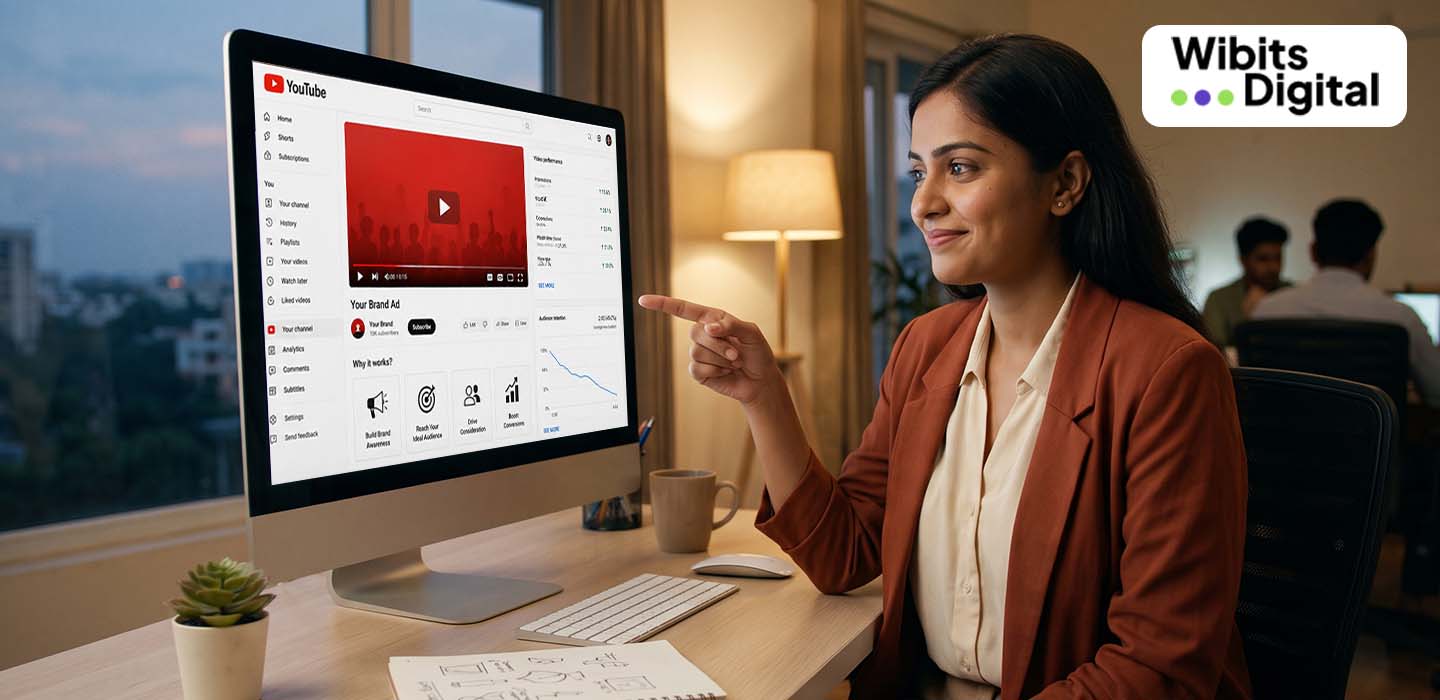
Let us be honest, for a moment. When you think about running YouTube ads what is the first picture that comes into your head when you think about YouTube ads? For most founders and marketing managers, it’s a massive global brand dropping six figures on a cinematic commercial during a major sports event. It feels shiny, expensive, and completely out of reach if you are working with a lean, realistic monthly budget.
Because of this myth, thousands of growing businesses completely write off YouTube. They pour every single dollar into Meta or regular Google Search, assuming YouTube is a luxury reserved exclusively for 7-figure monoliths.
Except, they’re missing out on a goldmine. One of the sharpest paid search experts in the industry recently called YouTube “the most mispriced ad inventory on the internet.”
If you ignore that kind of insight, you do so at your own financial peril.
The secret isn’t having an endless money pit. The secret is understanding the nuance of how real people actually consume video today, and how a smaller brand can outsmart a corporate giant using laser-focused control. Let’s pull back the curtain on how to run a profitable YouTube ad campaign without needing a Wall Street bailout.
Two Totally Different Planets: Shorts vs. In-Stream
What makes YouTube so brilliant and what most marketers completely mess up is how versatile the viewing experience is. People go to YouTube with completely different mindsets depending on the format they choose. If you treat a YouTube Short the same way you treat a 15-minute product breakdown, your money is going to vanish into thin air.
1. The Late-Night YouTube Shorts Swipe
Picture this: It’s 11:30 PM. You’re lying in bed, thumb lazily flicking up through vertical videos with the sound on. You aren’t hunting for a product to buy; you’re looking for a quick hit of entertainment or a laugh to wind down.
Your brain is half-engaged and because of that an ad appearing here has maybe two seconds to capture your attention before your thumb instinctively flicks to the next video.
The Strategy: Vertical video only. You need a killer hook right in the first second, and you must bake captions directly into the frame because many people watch while muting parts of their environment.
2. The Focused In-Stream Viewer
Now picture a different situation. It is a Sunday afternoon. A person on purpose clicks on a fifteen minute video that goes into a lot of detail about a hobby that’s not very well known. Like fixing up old mechanical keyboards or building a greenhouse in your backyard. They are settled in. They have high intent, and they are genuinely paying attention.
The Strategy: This is a completely different planet. If an ad interrupts this experience, it cannot feel cheap or rushed. It needs to carry the same narrative weight, quality, and gravitas as the niche content they chose to watch.
The Biggest Setup Mistake And How to Fix It
Most smaller brands fail on YouTube because they take a lazy, hands-off approach. They set up a generic Demand Gen campaign, upload a single random video file, attach a modest hundred-dollar daily budget, and hand the steering wheel entirely over to Google’s algorithm.
What happens next? Google defaults to whatever placement is cheapest and easiest to deliver and not what actually drives a profitable sale for your store.
Here is how smart agencies structure campaigns for e-commerce and scaling brands:
- Isolate Your Placements: Never lump everything together. Separate your Demand Gen campaigns by placement type. Build one campaign specifically for Shorts, another for in-stream placements, and a separate one for image surfaces if it fits your product line.
- Match Creative to the Environment: Never force a horizontal commercial into a vertical Shorts slot. Respect the medium.
- Look Beyond Last-Click ROAS: YouTube doesn’t always work like a direct-response banner ad. Google puts ideas in peoples heads. Then Google Search benefits from them weeks later. You should pay attention to how many people search for your brand and how much traffic goes to your website directly.
- Make sure you get what you pay for: You might think it is a deal to pay $5 to show your ad on YouTube when it costs $25 to show it on Meta but it is only a good deal if the people who see your ad are actually interested, in what you have to offer and become customers of Google and your brand.
Mastering Demand Gen for Ultimate Control
One of the coolest features of Google’s Demand Gen setup, something you simply cannot do on traditional social media ad managers is the ability to build custom audiences based on actual search history.
Pro Tip: Look at your top-performing search terms from your standard Google Shopping or Performance Max campaigns. Harvest those winners and build a dedicated “intent audience” for YouTube. This works exceptionally well for niche retail and B2B brands alike.
You can also upload your first-party customer data:
- People who get your email newsletter but have not made a purchase in a time.
- Visitors to your website who looked at things but did not complete their purchases and left their carts behind.
- Lapsed buyers who purchased six months ago.
Now that you have made your lists you can ask Google to help you find new people who like to shop in the same way as your best Google Ads customers.
A quick word of warning: if you want to run a campaign to reach people who have visited your website with Google Ads make sure you turn off something called Optimized Targeting. If you do not disable it, Google will automatically look for people outside your group of customers. While Optimized Targeting is great for finding people, it can ruin a retargeting sequence that is supposed to be focused on your core audience, your best current customers. It is often good for finding people because it can get you twenty percent more conversions for the same cost but it is not good for a precise retargeting campaign.
The High-Budget Trap vs. The Small-Budget Reality
If you manage a massive global brand spending millions a month, you have the luxury of burning cash to train an algorithm. Big accounts, with a lot of conversion data can set their targeting to reach an audience then just wait and let automated bidding work out the details.
If you have a budget and are trying to make the most of your money you do not have the luxury of doing that with big accounts.
Feed the Beast Strong Signals: Because smaller accounts don’t trigger hundreds of conversions a day, you must feed YouTube strong, specific audience signals from day one so it doesn’t wander blindly.
Placement Hygiene is Do-or-Die: For massive enterprise brands, auditing and excluding junk placements is just routine maintenance. For a growing business watching every dollar, aggressive placement exclusion is the line between a profitable month and a burned-out budget.
| Feature | YouTube Shorts Ads | In-Stream YouTube Ads |
| Viewer Mindset | Casual / entertaining / swipe fast | Intentional / deep focus / niche interest |
| Video Length | 6 – 15 seconds punchy and fast-paced | 30 secs to 2+ mins that should be story-driven |
| Format Style | Vertical video with bold burned-in captions | Horizontal or square & high production value |
| Primary Goal | Instant brand discovery and top-of-funnel reach | Deep engagement combined with trust building and consideration |
Key Takeaway
- Never use the same creative asset for a fast-paced vertical Short and a deep-dive in-stream video.
- Google’s search-based audience lists helps you to target people actively looking for what you sell.
- Aggressively monitor and exclude junk placements; placement hygiene keeps lean budgets safe.
- YouTube builds brand desire that traditional search and direct traffic harvest days or weeks later.
FAQs
1. Do you need video production equipment to run YouTube ads?
No you do not need video production equipment to run YouTube ads. While YouTube ads that play during videos do look better with good equipment YouTube Shorts are totally different. YouTube Shorts are great because they are real and made by people so you can film them right on your smartphone. Clarity, a fast hook, and good lighting matter much more than a Hollywood camera.
2. Is YouTube advertising expensive for local or small businesses?
No. YouTube advertising is not like the way of advertising on television. With YouTube you can decide how much you want to spend each day. You can spend little as ten dollars or twenty dollars per day. You want to show your ads to the people who will actually be interested in what you have to offer. You do this by using audience targeting and search intent lists.
3. How long you should run a YouTube campaign before you can say if it is successful or not?
You have to let your YouTube campaign run for least a few weeks maybe even a few months before you can really see if it is doing what you want it to do. This is because YouTube campaigns are about getting people to watch your videos and do something like visit your website or buy something from you.
4. What is the biggest mistake beginners make with Google Demand Gen?
Handing total control to the algorithm by uploading a single video, setting a broad budget, and applying zero audience guardrails. Google will naturally pick the cheapest, lowest-intent placements unless you configure campaign segments properly.
5. Can I use my existing Facebook and Instagram video ads on YouTube?
You can use videos for YouTube Shorts but it is a good idea to look at the pacing of the vertical videos when you use them for YouTube Shorts. Meta ads often rely heavily on sound-off visual hooks, whereas YouTube Shorts audiences expect quick entertainment value right from frame one.
Scale Your Brand Without the Guesswork
Working with YouTube and other platforms is a challenge. The thing is, you have to know what people are looking for on YouTube and other platforms. Then you have to make ads for YouTube and other platforms that people will actually pay attention to. This is not easy to do with YouTube and other platforms.
Mastering YouTube and refining your keyword intent does not have to be something you do by yourself. If you want to get your name there on the internet without having to hire a lot of people to help you with ads working with people who know what they are doing can make a big difference.
This is where Wibits Digital comes in to help make things easier. Wibits Digital helps businesses with marketing and growth services that are specialized and white-label. Mastering YouTube and refining your keyword intent is what we do. We help with media buying and SEO. Paid campaigns so you can get great results, for your clients or grow your own brand without a lot of hassle.